
How do I even pay off a credit card?
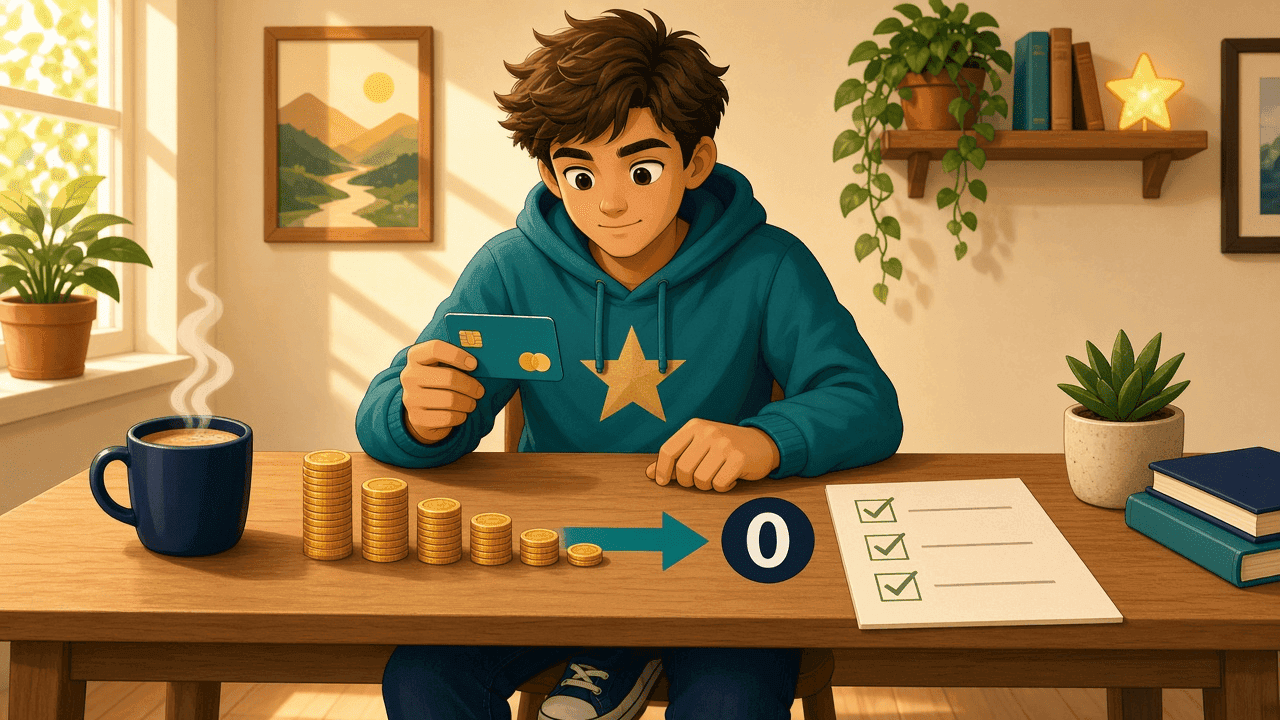
List the balance, pick a method, cut new spend, still live. No shame for a card balance.
To pay off a credit card, list every balance, pay more than the minimum, stop new spending on the card, then close it or cut the limit. Paying it off means clearing what you already spent, plus interest and fees if they’ve piled on, until the balance is back at zero. A card you already have is a bill to finish. Staying out of new card spending is the point.
Interest is the card company’s charge for letting the balance hang around. Pay slowly and more of your payment goes to interest instead of the actual spend. That’s why a plan beats vibes. Cards as a tool, not a lecture: Credit cards without the lecture.
Step 1. Get the real number
Log in. Write down: current balance, interest rate, minimum payment, and due date. One list beats five anxious guesses. If you’ve got more than one card, list each. Family money you borrowed to cover a card? Put that on the list too so nothing hides. Money from family. Keep it clean.
Step 2. Stop the bleed
While you’re paying it down, try not to add new purchases to that same card. Use a debit card or cash for day-to-day so the balance only moves one way: down. If you need the card for a bill that already sits there, cool. Just don’t treat it like extra income. Buy now, pay later is still money you owe, in smaller chunks. What even is Afterpay / BNPL?. When the balance is zero, close the card or ask them to cut the limit so it can’t quietly fill back up.
Step 3. Pick a payoff style that fits you
Two classics:
- Highest interest first. Attack the card (or portion) charging you the most. Maths-friendly.
- Smallest balance first. Knock out a small card for a quick win, then roll that payment onto the next. Motivation-friendly.
Either works if you stick to it. Strategies fit the individual. Choose the one you’ll actually follow. The pick, on its own page: How do I even pick avalanche vs snowball?. Same two paths on loans: Personal loans: what “good enough” payoff looks like.
Step 4. Pay more than the minimum when you can
The minimum keeps the account “okay” with the bank; it rarely clears the debt fast. Whenever your budget has spare room, shove it at the card. Autopay at least the minimum so you never miss a due date. Missing payments hurts your credit history and adds stress. What even is a credit score?.
Step 5. Still live (on purpose)
Budget a little for Friday with mates and social plans so the payoff plan doesn’t feel like a prison. Extreme restriction often snaps; a realistic plan lasts. North star: clear this debt so you’ve got room to save and invest, not so you can feel punished. What even is a budget?.
If it feels impossible
Call the card provider and ask what hardship options exist. Look at your whole budget: income in, must-pays out, then debt. HECS/HELP is its own system. Don’t mix it up with card interest, but do count every repayment that hits your cash flow. More on that: What even is HECS-HELP?. No product pitches here. Just: know the number, stop adding to it, pay on time, pay extra when you can.
Clearing a card is wealth-adjacent in the best way: less interest leaving your pocket, more clarity, more room for the future without pretending debt is fine forever. Several high-interest balances? The reorganisation map: What even is debt consolidation?. The wider first-pay setup, debt included, is in courses.
See also
Credit cards without the lecture · Personal loans: what “good enough” payoff looks like · What even is debt consolidation? · What even is HECS-HELP? · What even is a budget?
More in Debt
- Owing money isn’t a vibe fail
- What even is a credit score?
- How do I even build credit without wrecking myself?
- What even is Afterpay / BNPL?
- What even is debt consolidation?
- Credit cards without the lecture
- Personal loans: what “good enough” payoff looks like
- Money from family. Keep it clean
- What even is the HECS repayment threshold?
- How do I even pick avalanche vs snowball?
- Does Afterpay affect my credit score or a future home loan?
- Should I pay off HECS early?