
How do I even set up my first bank accounts?
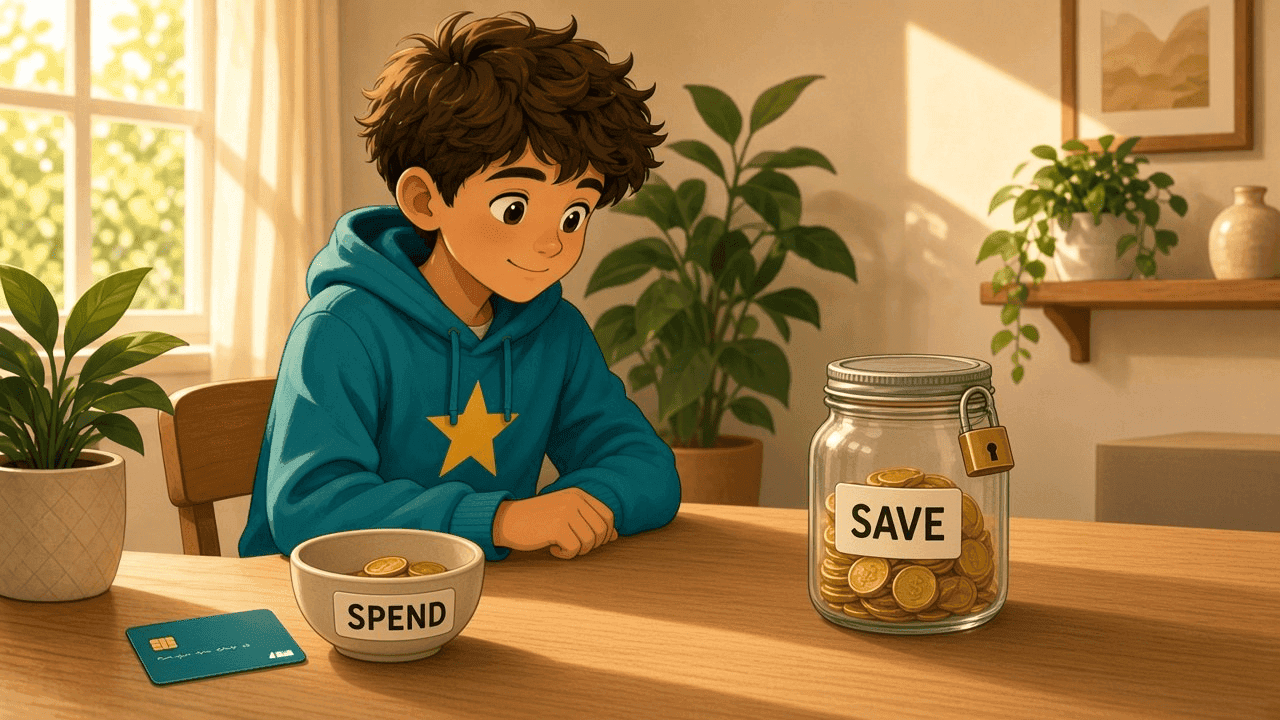
Everyday spend plus a separate savings pot: two jobs, two pots, less “where did payday go?”
Setting up your first bank accounts usually means opening an everyday account for spending and a separate savings account so your planned money isn’t sitting in the same place you tap your card. That’s it at the start: two jobs, two pots, less “where did payday go?”
Everyday vs savings. Why separate
Your everyday (transaction) account is for rent/board, food, transport, and the week’s living. Your savings account is for intentional slices: emergency money, named goals, sinking funds. When they’re mixed, it’s easy to spend the holiday drip on Tuesday snacks without noticing.
Separation isn’t about being strict. It’s about making the plan visible. You see what’s spoken for and what’s free to spend. The week-plan version: What even is a budget?.
What you’ll usually need
Banks ask for ID (passport or licence), your address, and often your Tax File Number (TFN). Giving your TFN means they don’t withhold tax on interest at a higher rate. It’s a form thing, not a trick. You’ll also pick how you want to access money: card, app, maybe both. The number itself: What even is a TFN?.
You don’t need to open five accounts on day one. Everyday + one savings is a solid first setup. You can add named pots later if you want clearer labels (emergency in one place, holiday drip in another).
Offset accounts: later, not day one
You might hear about “offset” accounts tied to a home loan. That’s a future-you topic if you ever have a mortgage. For a first job, skip the jargon. Focus on: pay lands → intentional savings slice moves → rest lives in everyday for the week.
Still live while you set this up
Having a savings pot doesn’t mean your social life freezes. Build the drip first (even a small one) then plan Friday with mates and the fun stuff inside what’s left. The accounts are just containers. The plan is what you put in them. A common parking spot for the savings side: What even is a high-interest savings account?.
Keep banks generic on purpose
Shop around for fees that make sense for you. Some accounts are free if you deposit a certain amount each month. We’re not naming brands here because the “best” one depends on your pay, your suburb, and what you need. Compare fee-free everyday options and a savings account that actually pays interest on the balance you keep there. Checklist for the spending account: How do I even pick an everyday bank account?.
Once the two-pot setup is in place, a tool like DoshHero Budget can help you see those slices against your real pay, so the accounts match the plan, not the other way around. Surprise buffer vs named pots: What even is an emergency fund?.
See also
What even is a TFN? · What even is a high-interest savings account? · What even is an emergency fund? · What even is a budget? · How do I even automate savings from each pay?
More in Budget
- What even is a budget?
- How do I even split my first pay?
- What even is net worth?
- What even is an emergency fund?
- Set up the DoshHero Budget
- Your first real budget (the three buckets)
- Sinking funds without the spreadsheet stress
- Living now while setting up later
- What even is a sinking fund?
- What even is car insurance?
- How do I even budget while living at home?
- How do I even budget when I rent with mates?
- What even is a high-interest savings account?
- How do I even automate savings from each pay?
- How do I even save for a car or holiday?
- How do I even set money goals that stick?
- What even is contents insurance?
- How do I even pick an everyday bank account?
- What even is inflation?
- How do I even build an emergency fund?
- How do I even save for Christmas (and birthdays) without the January hangover?
- How much of my pay should I actually save?
- How much board should I pay my parents?
- Am I behind? Savings and net worth at 20 and 25
- How do I even buy my first car without a loan wrecking me?
Dosh Drop