
What even is net worth?
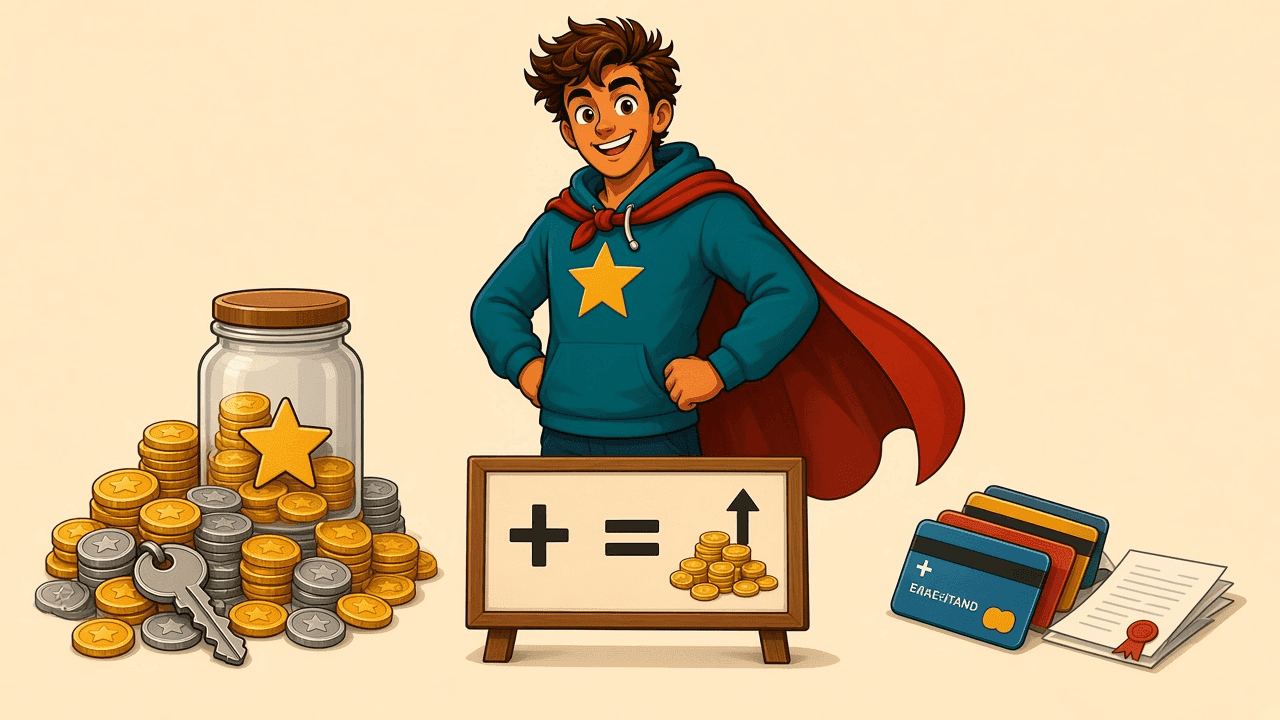
Own minus owe. One number. Watch the pile grow.
Net worth is what you own minus what you owe. That’s your money pile in one number: cash, stuff that counts as yours, Super, minus debts like a car loan or credit card. Own more than you owe? Positive pile. Owe more right now? The number can sit under zero. Either way, it’s just maths, not a personality score.
Think of it like a scoreboard for your whole money life, not this week’s leftover. Your budget steers the fortnight. Net worth zooms out: is the pile creeping up over months? The week-plan version is What even is a budget?.
What’s in “own”?
Stuff that actually belongs to you and has value you could (in theory) turn into cash someday:
- Cash in the bank
- Savings
- Investments (shares, crypto if you’re into that. Value moves around)
- Super (yep, it counts. It’s yours, even if you can’t touch it yet)
- A car you own, maybe later a place. Big items if they’re yours
You don’t need a fancy inventory. Start with what’s obvious.
What’s in “owe”?
Money you’ve borrowed and still have to pay back:
- Credit cards
- Car loans / personal loans
- BNPL balances
- HECS/HELP is a bit special in Aussie life: some people track it in net worth, some park it separately because it usually comes out of pay over time. Either approach is fine; pick one and stay consistent so the trend still means something. More in What even is HECS-HELP?.
Why bother tracking it?
Because bank balance alone lies a little.
You can feel “rich” the day after payday and still be going backwards if debt is climbing. Or feel broke mid-fortnight while Super and savings quietly stack. Net worth answers a calmer question: over time, is my pile growing?
That’s the wealth-creation angle without the hype. You’re not competing with someone’s Instagram. You’re watching your line (month to month, year to year), while you still live your life.
A low or negative number early on is normal for a lot of first-job years. HECS, a car loan, share-house life. The win isn’t a perfect starting number. It’s the direction: building a buffer, chipping debt, letting Super and savings do their thing. Age charts that say you should already have a pile: Am I behind with money?.
Budget and net worth. Different jobs
- Budget = this week’s plan (Housing, Transport, Food, future slice, fun)
- Net worth = the long scoreboard
Nail the week, and the scoreboard tends to move. Track the scoreboard, and you notice when the week plan isn’t feeding the future.
Keep it easy
Once a month is plenty. Same day each month if you can. Update balances. Skip empty future months so the chart doesn’t look cursed. Watch the trend, not every wiggle.
When you want it in one place, DoshHero Net Worth is built for that: cash, Super, investments, debts, monthly balances, without the grey-bank-app energy. A simple note on your phone works too. Habit > tool.
Own minus owe. Check it now and then. Live your life. Let the pile grow on purpose.
See also
What even is a budget? · How do I even split my first pay? · What even is an emergency fund? · What even is HECS-HELP? · What even is investing?
More in Budget
- What even is a budget?
- How do I even split my first pay?
- What even is an emergency fund?
- Set up the DoshHero Budget
- Your first real budget (the three buckets)
- Sinking funds without the spreadsheet stress
- Living now while setting up later
- What even is a sinking fund?
- How do I even set up my first bank accounts?
- What even is car insurance?
- How do I even budget while living at home?
- How do I even budget when I rent with mates?
- What even is a high-interest savings account?
- How do I even automate savings from each pay?
- How do I even save for a car or holiday?
- How do I even set money goals that stick?
- What even is contents insurance?
- How do I even pick an everyday bank account?
- What even is inflation?
- How do I even build an emergency fund?
- How do I even save for Christmas (and birthdays) without the January hangover?
- How much of my pay should I actually save?
- How much board should I pay my parents?
- Am I behind? Savings and net worth at 20 and 25
- How do I even buy my first car without a loan wrecking me?
Dosh Drop