
What even is car insurance?
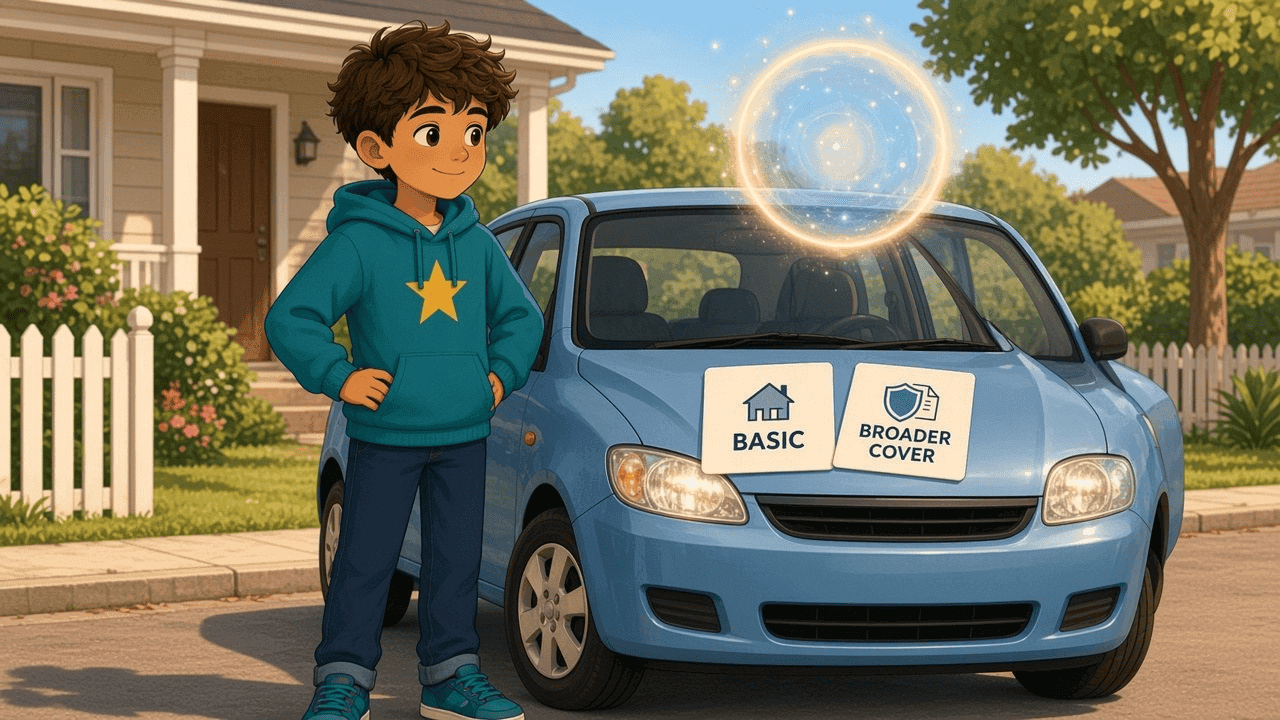
CTP with rego, then optional third party or comprehensive. Cost vs protecting your own ride.
Car insurance is a product you pay for so you’re not stuck with huge bills if your car is damaged, stolen, or you accidentally damage someone else’s. In plain terms: you pay a regular amount (a premium), and if something covered happens, the insurer helps with the cost according to the policy.
This is about the car itself and other people’s cars, not home contents insurance. Different product, different job.
CTP. The compulsory bit (keep this light)
In Australia, Compulsory Third Party (CTP) insurance is tied to your rego in most states and territories. It’s there mainly to cover people injured in a crash. You usually pay it as part of registering the car. It’s separate from the optional cover you choose on top. Exact rules differ by state, so check your local transport site when you rego. We’re staying high-level here.
Basic / third party. What it usually covers
“Third party” style cover is the more basic optional layer. In simple terms, it’s aimed at damage you cause to someone else’s car or property. If you hit another vehicle, this kind of policy may help with their repair costs.
What it typically does not fully cover: fixing or replacing your car after a crash, theft of your car, or storm damage to your car. You’re protecting others (and your wallet from their claim) more than protecting your own ride.
Trade-off: usually cheaper premiums. You accept more risk on your own car’s value. Makes more sense if the car is older or worth less, but that’s your call, not a lecture.
Comprehensive. What it usually covers
Comprehensive cover is broader. It usually includes third-party style protection and help with damage to your car: crashes, and often theft, fire, storm, and vandalism, depending on the policy wording.
Trade-off: costs more each year (or month). You get more protection for your own vehicle. Often chosen when the car is newer, financed, or would be expensive to replace: again, your situation decides.
Cost vs protection. The real choice
There’s no universal “right” level. Ask yourself: if this car was written off tomorrow, could I replace it from money I already have set aside, or would that wreck the rest of my plan? Higher cover costs more upfront; lower cover can cost more later if something hits your own car.
Shop policies by what’s included, excess (what you pay if you claim), and exclusions, not just the headline price. No brand recommendations here; compare a few and read the Product Disclosure Statement in plain English.
Where it sits in your budget
Treat the premium as a known cost. If it’s annual, a sinking fund drip from each pay keeps it from blowing one fortnight. Same idea as rego: intentional slice, not a surprise scramble. Wheels is rego and insurance. Saving toward the car itself, then buying it outright: How do I even save for a car or holiday? and How do I even buy my first car without a loan?.
If you’re mapping pay to bills in DoshHero Budget, put car insurance (and CTP/rego) on the plan so the week’s fun money isn’t accidentally funding next year’s premium. Wheels as a bucket: Your first real budget (the three buckets).
See also
What even is a sinking fund? · How do I even save for a car or holiday? · Your first real budget (the three buckets) · What even is a budget?
More in Budget
- What even is a budget?
- How do I even split my first pay?
- What even is net worth?
- What even is an emergency fund?
- Set up the DoshHero Budget
- Your first real budget (the three buckets)
- Sinking funds without the spreadsheet stress
- Living now while setting up later
- What even is a sinking fund?
- How do I even set up my first bank accounts?
- How do I even budget while living at home?
- How do I even budget when I rent with mates?
- What even is a high-interest savings account?
- How do I even automate savings from each pay?
- How do I even save for a car or holiday?
- How do I even set money goals that stick?
- What even is contents insurance?
- How do I even pick an everyday bank account?
- What even is inflation?
- How do I even build an emergency fund?
- How do I even save for Christmas (and birthdays) without the January hangover?
- How much of my pay should I actually save?
- How much board should I pay my parents?
- Am I behind? Savings and net worth at 20 and 25
- How do I even buy my first car without a loan wrecking me?
Dosh Drop